
Trees become stronger after they are cut down.
Wood strengthens after being cut down
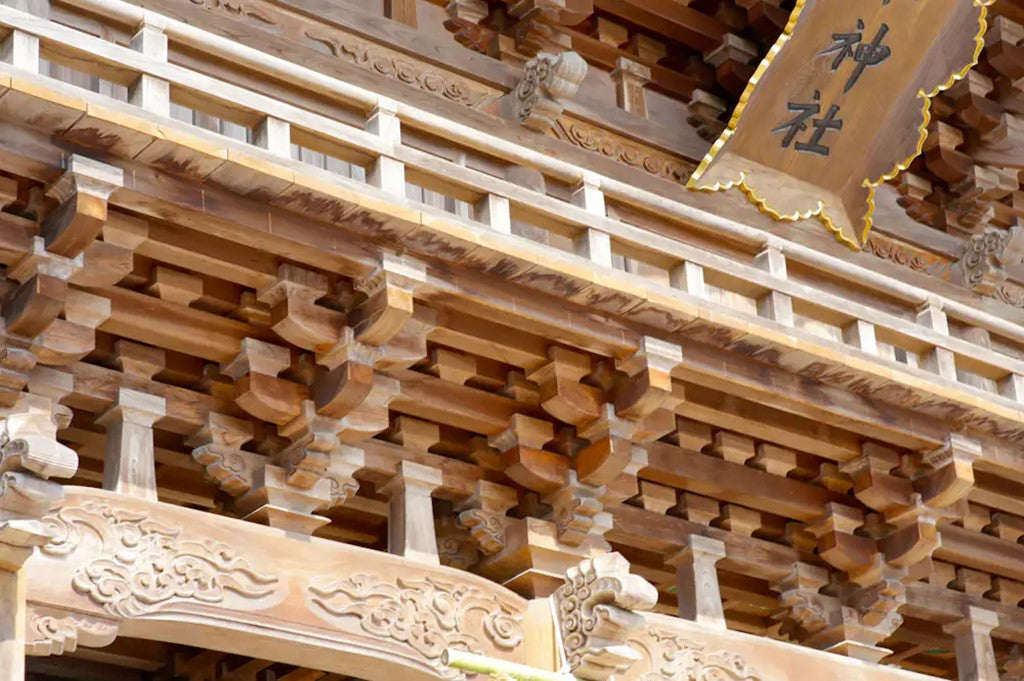
In Nara, there are 1,300-year-old wooden buildings still standing. These are the structures of Horyuji Temple. Having endured typhoons and earthquakes, the hinoki cypress used in their construction continues to support the buildings to this day.
What's remarkable is that this wood was cut down long ago. It has no roots or leaves, and it no longer absorbs water. Yet, it has served its purpose for 1,300 years.
In the world of master carpenters, there is a saying: **"Wood lives for a thousand years, and serves for a thousand years."** It stands for a thousand years in the mountains and then another thousand years after being used in a building. For wood, being cut down is not the end, but the beginning of its second life.
---
200 years after felling
Hinoki cypress is said to gradually harden and strengthen over about 200 years after felling. Research that has studied wood strength over long periods also reports this tendency.
The reason lies in the changes in the remaining moisture and resin within the wood. The water that filled the gaps in the cells slowly drains, and the fibers tighten. At the same time, the components within the wood gradually change to a state closer to crystallization. The wood becomes denser as it dries.
After that, its strength begins to decline very gradually. Even after a thousand years, it retains roughly the same strength as freshly cut wood. Wood accomplishes what would take many human lifetimes as if it were a matter of course.
A single slab of wood is the same. The day it arrives at the workshop is its youngest day.
---
The term "Kiri-shun"
The suitable season for felling trees is called **Kiri-shun**. This period is from the autumn equinox to winter. It is the time when trees stop absorbing water, and their internal moisture content is at its lowest.
Wood felled in spring or summer contains a lot of water, takes a long time to dry, and is prone to insects and mold. Therefore, those who handle good wood choose the season for felling.
There are always reasons to rush. However, waiting for the season ensures that the wood lasts longer. Logically, that's all there is to it.
---
Laying wood in the mountains with leaves on
There is a method of laying felled trees in the mountains with their branches and leaves still attached. This is called **leaf-drying**.
Even after being cut, the leaves remain alive for a while, continuing to transpire moisture. The tree uses its own leaves to draw out water from within itself. Over several months, the moisture in the trunk slowly decreases.
Wood that has undergone this lengthy process will have a clearer color, retain its aroma, and be less prone to warping later on. While rapid drying with artificial heat is certainly faster, it extracts the wood's tenacity and natural oils along with the heat.
Even after milling, a single slab of wood is allowed to rest for several more years in a well-ventilated area. Because the drying process differs between the inside and outside of the slab, rushing it inevitably leads to warping or cracking later on.
Waiting is not a task. It's a judgment.
From the day it arrives, time begins anew.
Everything discussed so far concerns the time before a table arrives in your home.
Beyond that point, time is out of our hands. The morning light falls on the tabletop, a bowl of miso soup is placed, a child spreads out a notebook, and brushes away eraser dust. Someone leans on an elbow, and a slightly longer conversation unfolds.
Even then, the wood is still active. It absorbs moisture in the rainy season and swells slightly, then shrinks in the dry winter air. This respiration-like movement is proof that the wood is not dead.
The fact that 1,300-year-old hinoki cypress still supports roofs is not only because the wood was strong. It's because there were people at that time who handled the wood in accordance with its natural timeline.
Choosing a single slab of wood also means taking on the continuation of that legacy.
There’s no need to rush. That wood has already waited for hundreds of years.

Written by 山岸勇斗